



- MONETARY POLICY STATEMENT
PRESS CONFERENCE
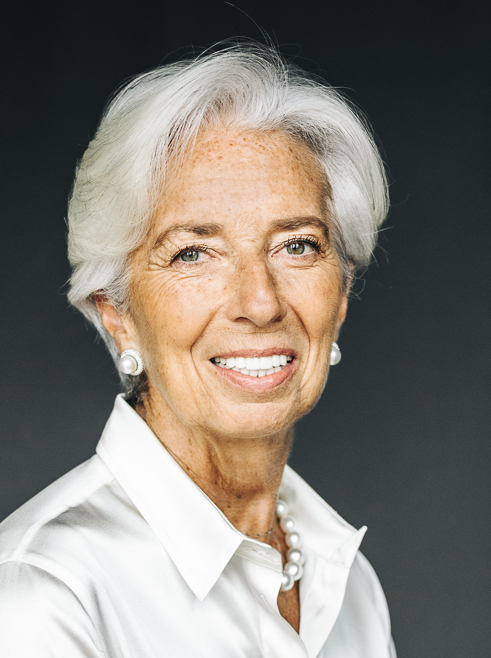
Christine Lagarde, President of the ECB,
Boris Vujčić, Vice-President of the ECB
Frankfurt am Main, 29 October 2026
Jump to the transcript of the questions and answersGood afternoon, the Vice-President and I welcome you to our press conference.
The Governing Council today decided to keep the three key ECB interest rates unchanged. Energy prices have continued to rise, posing upside risks to the inflation outlook and downside risks to the growth outlook. While the full effects of the energy shock are still unfolding, underlying inflation has remained broadly stable so far and wages do not show a material response at this stage. The increased magnitude and duration of the energy shock, as well as the implications for indirect and second-round effects, are likely to drive up inflation and lower growth. Financing conditions have tightened since our last meeting, which is likely to weigh on inflation and growth. We are committed to setting monetary policy to ensure that inflation stabilises at our two per cent target in the medium term.
We remain well positioned to navigate the current elevated uncertainty. We will follow a data-dependent and meeting-by-meeting approach to determining the appropriate monetary policy stance. In particular, our interest rate decisions will be based on our assessment of the inflation outlook and the risks surrounding it, in light of the incoming economic and financial data, as well as the dynamics of underlying inflation and the strength of monetary policy transmission. We are not pre-committing to a particular rate path.
The decisions taken today are set out in a press release available on our website.
I will now outline in more detail how we see the economy and inflation developing and will then explain our assessment of financial and monetary conditions.
Economic activity
The incoming data suggest that the euro area economy continued to expand in the third quarter of the year. Services have recovered, after weakening at the start of the Middle East conflict. Manufacturing, digital services and exports are benefiting from AI-related business investment. Government spending on infrastructure and defence is also supporting activity. These factors should continue to underpin growth in the near term. At the same time, renewed energy price increases have hit consumer confidence, and higher financing costs are likely to weigh on growth.
The unemployment rate remained at 6.4 per cent in August. Growth in employment and the labour force remains subdued, while productivity has gradually picked up.
Over the medium term, a recovery in confidence and real incomes, driven by gradually declining energy prices and a robust labour market, should bolster domestic demand. Investment in AI-related activities and government spending on infrastructure and defence should also continue to support growth. Export growth should pick up on the back of strengthening foreign demand.
Higher potential growth requires structural reform and has to be underpinned by sound public finances. Fiscal sustainability is a crucial anchor for broader economic stability. Fiscal responses to the energy shock should be temporary, targeted and tailored. Simplifying and harmonising rules across the EU’s Single Market, accelerating the energy transition and completing the savings and investments union are key building blocks to make our economy more dynamic and resilient. As the process for agreeing on the legal framework for the digital euro moves into its final stage, we reiterate the importance of reaching agreement on the Single Currency Package as quickly as possible.
Inflation
Inflation rose to 3.8 per cent in September, from 3.2 per cent in August. Energy price inflation increased markedly, to 18.9 per cent, from 14.3 per cent in August. Diesel and petrol prices reached new peaks in September, in part reflecting elevated refining margins. Inflation excluding energy increased to 2.3 per cent in September, from 2.1 per cent in August. Food price inflation increased to 1.3 per cent, from 1.1 per cent. Services inflation increased to 3.2 per cent in September, from 3.0 per cent in August, while goods inflation declined to 1.1 per cent from 1.2 per cent.
Indicators of underlying inflation have remained broadly stable, although the early stages of the pricing chain point to upward pressures. Wage pressures remain moderate. Compensation per employee grew by 3.3 per cent in the second quarter, down from 3.6 per cent in the first quarter, while rising productivity has helped contain the growth of unit labour costs. Our forward-looking wage tracker suggests that negotiated wage growth will fluctuate between 2.5 per cent and 2.8 per cent in the remaining months of 2026 and average 2.6 per cent in the first three quarters of 2027. Inflation expectations over shorter horizons have risen, but most measures of longer-term inflation expectations stand at around 2 per cent, supporting the stabilisation of inflation around target in the medium term.
Energy prices have increased beyond the baseline path foreseen in the September ECB staff projections. This is likely to raise inflation further in the near term and keep headline inflation well above target over the coming quarters. Thereafter, declining energy inflation, together with the effects of higher interest rates, should support the return of inflation to target.
Risk assessment
The risks to the growth outlook are to the downside. This is due, in particular, to the Middle East conflict and recent developments in Russia’s unjustified war against Ukraine. Continued disruption of energy supplies could cause energy prices to rise further and for longer than currently expected. This would weigh on real incomes, spending and investment. A worsening of global financial market sentiment or intensifying spillovers in global bond markets could tighten financing conditions and thereby dampen demand. Fiscal uncertainty may also further tighten financing conditions and weaken confidence, thereby lowering consumption and investment. A resurgence of trade tensions between major economies could further disrupt supply chains, reduce exports and weaken consumption and investment. By contrast, growth could turn out to be higher if the economy and energy markets were to adapt more quickly than expected to the disruption caused by the ongoing conflicts or if these were resolved sustainably. Moreover, the adoption of new technologies by euro area firms and government spending on infrastructure and defence, as well as reforms to enhance productivity and complete the EU’s Single Market, may drive up growth by more than expected.
The risks to the inflation outlook are to the upside. This is due, in particular, to the Middle East conflict and recent developments in Russia’s unjustified war against Ukraine. The energy shock could intensify further and its effects on other prices and wages could be stronger than currently expected. Gas prices, in particular, could increase if supply is disrupted further or an unusually cold winter coincides with low storage levels. The longer energy prices stay high, the more likely they are to drive up broader inflation through indirect and second-round effects. Renewed trade tensions could give rise to more fragmented global supply chains, curtail the supply of critical raw materials and worsen capacity constraints in the euro area economy. Extreme weather events, potentially reinforced by intensifying “El Niño” conditions, and the unfolding climate and nature crises more broadly, could drive up food prices by more than expected. By contrast, inflation could turn out to be lower if ongoing geopolitical conflicts were resolved sustainably or if indirect or second-round effects from higher energy prices proved less pronounced than anticipated. More volatile and risk-averse financial markets, together with higher long-term interest rates, could weigh on demand and thereby lower inflation as well.
Financial and monetary conditions
Financial conditions have tightened since our previous meeting. Interest rates have broadly moved up, while stock prices have fallen.
The cost of market-based debt for firms rose to 4.1 per cent in August, from 4.0 per cent in July, while bank lending rates for firms remained at 3.8 per cent. Growth in bank lending to firms slowed to an annual rate of 4.2 per cent in August and September, from 4.4 per cent in July, while corporate bond issuance grew at an annual rate of 4.2 per cent in September, up from 3.8 per cent in August and 3.5 per cent in July. Credit standards for loans to firms tightened in the third quarter, as reported in our latest bank lending survey, with banks citing concern about the economic risks faced by their customers. Despite higher financing needs for inventories and working capital, corporate loan demand declined, reflecting in particular higher interest rates.
Mortgage rates rose to 3.6 per cent in August, from 3.5 per cent in July, while mortgage lending growth edged down to 3.0 per cent in September. Credit standards for mortgage lending were unchanged in the third quarter, whereas demand for mortgages declined substantially given higher interest rates.
Conclusion
The Governing Council today decided to keep the three key ECB interest rates unchanged. We are committed to setting monetary policy to ensure that inflation stabilises at our two per cent target in the medium term. We will follow a data-dependent and meeting-by-meeting approach to determining the appropriate monetary policy stance. Our interest rate decisions will be based on our assessment of the inflation outlook and the risks surrounding it, in light of the incoming economic and financial data, as well as the dynamics of underlying inflation and the strength of monetary policy transmission. We are not pre-committing to a particular rate path.
In any case, we stand ready to adjust all of our instruments within our mandate to ensure that inflation stabilises sustainably at our medium-term target and to preserve the smooth functioning of monetary policy transmission.
We are now ready to take your questions.
The first one, on monetary policy, is that for the first time in I don't know how long the mentioning of second-round effects in your press release was quite striking. So does it also mean that the market is about right to expect a rate hike in December, because clearly there is now a risk of second-round effects?
My second question is: How do you marry your position which was, you said, I think it was spring this year, that the captain stays on the ship when there are clouds on the horizon, given that the euro area is probably in a worse situation than in spring, looking at France, looking at the inflation picture, and perhaps you can tell us more about your motivation?
I would suggest that we deal first and foremost with the monetary policy statement and the monetary policy decision questions, and that if there are additional questions in relation to me, for instance, that we keep that for the end, because the real order of business here is monetary policy. So your second question, I'll deal with it later in the press conference, if that's okay with you.
You are right that second-round effects – and the risk of second-round effects – is something that we have paid very special attention to. I think I said that in previous press conferences. As inflation rises, as the risk to inflation has increased, we pay special attention to the direct effect – we see it clearly – to the indirect effect – we have seen an increase of those indirect effects – and to the secondary effects, which would require a particular policy decision.
We are very attentive and, at this point in time, we are not seeing a risk of second-round effects in addition to what is already included in the projections. So if you will, the projections that were prepared in September did include the risk of second-round effects. So we are looking very attentively to that and, for the moment, as I think we say very clearly in the monetary policy statement, we do not see a material risk of second-round effects at the moment.
But give me the opportunity, because I deferred your second question to a bit later, to give you a little bit of flavour of the debate that we had. Because while we were very attentive to second-round effects, and in particular to the evolution of wages, to the wage tracker, to the compensation per employee projections, to every instrument that we have to measure wages in all sectors, including the opening position of unions in the coming collective bargaining agreement discussions, we have also looked at what has really significantly changed compared to last September.
And the two key changes that we have seen is, first and foremost, the energy prices. And on that front, it's a combination of oil prices, but more importantly, petrol, fuel, gas, and of course refining margins. And that has increased significantly, it's well reflected in the energy inflation numbers – 18.9[1] if I recall, as compared to a lower number in August[2] – so a clear increase there.
But another new development that we have observed as well since September is the cost of long-term financing, which has indeed increased. And of course, we look at numbers. And the average 10-year sovereign yields have risen by around 35 basis points since our last cut-off for the September projections.
If you combine these two factors – actually, the Governing Council debated whether a hike was appropriate – but, on the basis of the uncertainty that accumulates and that rises as well, on the basis of underlying inflation that has broadly remained unchanged, the Governing Council unanimously decided that we were well positioned enough at this stage to hold, and that a measured approach, at this point in time, remained appropriate.
So that's the discussion that we had over the last few hours as well as yesterday afternoon. I think it gives you the flavour of dissecting inflation, as much as we could, and the consequences of inflation on wages in particular, but also the overall changes that we have seen, and always applying our three-pronged approach to our monetary policy stance.
Given what you said about upside risk to inflation, you just said the middle path seems appropriate. Was there also consensus on this in the Governing Council? Because you mentioned there was a discussion of raising interest rates. So was there unanimity on this as well, and given this upside risk, do you think the ECB will need to keep raising interest rates at some point in the future?
Second question is why would you leave Europe's most powerful financial position? And I'm especially interested in this thought that you might want to take a greater view on French politics, want to have the ability to express yourself. Is this indeed the case, and in what way would you be doing this? Would you be standing for office, or would you be just commenting on what's happening?
The second question, I will address it at a later stage.
But on your first question, there was that debate. We look at numbers, we look at increased risk, we look at the financial tightening as a result of the long-term interest rates, and pros and cons, and there were views along the lines of maybe now, why not? There was a unanimous decision at the end of the discussion that we were in a sufficiently good position to actually wait for additional information, and the inter-meeting period will be information-rich.
I'm going to take you through the list of what we're going to receive in the next few weeks that will actually help us determine whether the situation that we see now – which could have warranted a hike – is going to be confirmed. And in that case, the sense of direction is quite clear.
So, the list of information that we will have: A new set of staff projections – December will be a projection exercise. Two new inflation prints. Quarter three GDP. Q3 employment, compensation per employee and negotiated wages. Two unemployment readings. Two industrial production releases. The November PMIs. Two rounds of bank interest rate statistics for both September and October.
So as you see, there is a mine of information and data that we will receive in the weeks to come, and this will be particularly relevant with underlying inflation. Because while underlying inflation has not been very informative at the beginning of the shock, the more we progress into the shock, the more informative-rich the underlying inflation indicators are. They are beginning to be more informative and, broadly, they haven't changed. There's a specific mention to that effect in the monetary policy statement.
But with those six weeks of additional information, we will have a lot more in relation to underlying inflation, and that's what we will be particularly attentive to. Not to the detriment on inflation outlook. We will continue to look at the inflation outlook. We will continue to look at the risks. We will most likely produce scenarios again in December. And we will, of course, look at the dynamics and the strength of monetary policy transmission. But underlying inflation will probably take a particular standing in the three-pronged approach that we apply to our monetary policy decision.
My first question is on the French bond markets in particular. So with the kind of spread widening we've seen in recent weeks, there's been a lot of questions about whether and when the ECB should get involved. Can you tell us a bit about which metrics you're watching specifically? Is it more about the speed of the adjustment, the absolute level of the spread, or is it actually about contagion to other countries?
My second question, also in the same vein as my colleagues: I'm sorry about your departure. You're now leaving at the beginning of a year with a lot of national elections, especially in your home country. Did you consider whether this particular timing could undermine the independence of the ECB?
The first response that I would give you is that this long term – and we look at the tenure, we look at the entire curve, but say the long end of the curve across the world, not specifically for a member state, not specifically for the whole of Europe, but across the world – has risen significantly. If you compare numbers, say you take February and now, you have a significant number of basis points that these government[3] bonds have increased by.
And this is caused by multiple factors. This is caused by expected inflation, this is caused by the expected interest rate path, and we think – and there is a very interesting blog that I highly recommend – we think that the debt issuance by some of the hyperscalers, without really crowding out yet, but increasing the volume of long-term bonds, also plays a role. But that has affected the entire market.
Second observation, and that applies also to all countries: Those countries with high debt have to factor into their fiscal policy plans the fact that interest rates are higher, and will probably remain higher, for a period of time.
In Europe, if you apply that principle, what it means is that policy measures have to be adopted, as part of a plan that is always submitted to Brussels, and that has to comply with the European fiscal framework.
So we will be looking at all that, obviously, and some member states face particular challenges. I would say that it narrows down to those countries that have a high level of debt in general.
But I would also add that, should market developments threaten the smooth transmission of our monetary policy, including through unwarranted and disorderly market movements, we have instruments available to respond. And the criteria and conditions under which this applies are well known, they are published, and I'm sure you know them.
You mentioned that you are still in the phase of measured tightening. That said, why would there be any doubt that the ECB will stick to the quarterly pace and hike again in December?
And my second question, also on a personal note: Will you let us know what you are going to do explicitly after 7 February?
Yes, at this point in time we are still on this measured response to the current situation. And as I said earlier on, we will assess the development of the geopolitical situation, the development of energy prices, the development of tightening of the cost of financing, and any other figures that are relevant to compare the situation as we have it now with what we receive next December. And as I said, unless there was a major development, the direction of travel is quite clear for all of us.
Is there a case for reducing our activity to the quarterly meetings? No. We have never restricted ourselves to that. It is true that we are more data-rich at those projection meetings, but we are also capable of understanding what staff is explaining to us, the information they're collecting, the analysis that they do, and if it was so warranted in order to reach our target of 2% medium-term, not restricted to quarterly meetings. And we have no plan to restrict the number of meetings that will deal with monetary policy.
I have also one on implications of your decision today. So, you are the eighth of 26 Executive Board members in the history of the ECB who is leaving early, before serving the full term, which is quite a high rate. Does this suggest there are flaws in the ECB's governance, or are eight years too long? You said in this Bloomberg interview, early at the start of the year, you initially thought it's a five-year term. So I would be interested in your thoughts on that.
And also, coming back to French bond yields: To what extent is the recent rise in government bond yields doing some of the ECB's work at the moment? And is the need for further interest rates increases reduced because of that?
On your first question, I will only address the issue of governance. I think the governance of the ECB has proven its solidity. We have had transition in the past. Business continuity has always been the mantra for this institution. It has never failed. And I have every confidence that it will continue to apply the principles of continuity, of mission-focused, determined action to reach the target of our 2% medium term. And you can rest assured that until 7 February I'm in charge, I'm focused and I will be working without any reservation, without any excuses.
On your other question, I think I've addressed that, and it's really one of the phenomenons that we have observed which have changed the picture since September. Because yes, you're right, long-term yields have increased across the board. More so in some countries, less so in others, and then you begin looking at the spreads, and we look at everything.
But that has been a qualifying element, if you will, to the increase in energy prices. So energy prices have increased inflation, long-term financing costs have qualified the magnitude of that increase, and it's in those circumstances – which we will be very attentive to in the weeks to come, and with another special focus on underlying inflation – that we will make our decision in December.
I would like to know if this no-hiking thing, because of tighter financial conditions in the markets, is one thing only for this meeting, or if it will happen to continue throughout November, the ECB could not hike or keep interest rates unchanged again because of that?
And a second question for the pile for later. The mandates in the European Council and the European Parliament are going to be discussed before you leave. Would you be interested at all in applying to those positions, just to keep you near?
I think you're right to actually characterise our decision. I hadn't thought about it, but you're right in characterising it as a “no-hiking decision”. Because we did ask ourselves the question, and there was a number of us assessing and pondering whether it was warranted as of now already or whether we needed to confront the current assessment with future data, numbers, elements that we would assess against our three-pronged monetary policy reaction function.
As I have said, and you're probably getting tired of me saying it, but we decide meeting by meeting. So it does not indicate that we will not be hiking and our next meeting is in December. As I've said earlier, I think in response to a previous question, if the assessment that we have today is not infirmed by significant developments, the direction of travel is clear.
I have a question linked to France, and it's only for the second and last part of the answering of the bunch of questions we had today. What really concerns you the most in France, in your home country, and certainly not only the high yields for the moment? So could you maybe describe what are the main concerns? You don't want to stay neutral toward this situation – what will be the nature of your intervention? Do you intend to support actively maybe one candidate or, if so, which one?
And the last, maybe very léger, question is when did you inform your grandchildren about your decision? Je m'en souviens.
Eux aussi. Eux aussi.
Are there other questions on monetary policy?
I was wondering also about France a bit, so it's a bit on the fence of monetary policy. But given the current situation in France, besides the spreads rising, not all that much has changed in the last six months. High debt has been known for quite some time. Yet now there are some talks about the possibility of another euro crisis. I was wondering what your thoughts are on that?
And I do have a second question, also about your departure. Now in the first six months of 2027, three experienced board members will leave the ECB. I was wondering how you will think about the continuity of the ECB in that regard?
So, have there been changes in the last six months? Well, there clearly have been changes. There are the ones that apply to all countries, the ones related to energy prices in general, the ones related to financing – and particularly the financing costs at the long end of the curve, and obviously we are mindful of all such developments.
Do I fear that there will be developments coming up? There will be developments, obviously. But this is not going to deter us, European Central Bank, from delivering on our mission of price stability. And we will continue to do that, on the basis of all the information that we receive.
Two questions, if I may. The first one is what worries you the most today, if it's inflation or financial fragmentation?
And in September, French sovereign bond holdings declined significantly less than Italians and Germans under the quantitative tightening program. So, has the pattern continued in October, and is this purely a mechanical roll-off?
What worries me most is anything that affects price stability, because we are fixated on our mandate, and price stability is our compass. Obviously, inflation matters a lot, but price stability does not take place without financial stability, so we have to look out for any threats to financial stability and any threat to price stability. So, I would say that I would package this too, because what's driving us is the price stability mandate that we have.
Regarding the second question: My understanding of that – but I'm not the top-notch expert for all redemptions of all bonds coming up for all countries across the Member States – what I can tell you is that we are not changing our policy as far as letting redemptions take place without purchasing and without replacing those bonds that come for redemption.
I also know for a fact, but that's from previous life, that November is a pretty heavy month when it comes to France in particular. But it's all mechanical. There is no behind-the-scene arrangement to tweak here, tweak there, rebalance and cut corners. We just apply the principle of no redemption.
Would you like to address the other questions?
Allow me not to necessarily dig into each and every specific aspect of your questions in relation to my decision to step down.
My decision is to step down from my position as President of the European Central Bank after the February monetary policy Governing Council.
So you will have the great pleasure, and I will have the great pleasure, of seeing those of you who care to come twice: once in December, once in February. So we are not done. We will continue to see each other, and I'm delighted about that.
There is never a good time to leave, but it's embedded in the governance of the ECB that presidents, board members, have to leave, because they cannot be up for renewal. So the end of my term in any event would have been October 2027.
The reason I'm anticipating the end of my term, by leaving in February of 2027 instead of October is, as I have said to colleagues, members of staff and governors, because I want to have the freedom of speech, the freedom of expression and the freedom to engage on matters that are not monetary policy matters.
As you all know, as President of the European Central Bank – and my colleagues on the Executive Boards and on the Governing Council are under pretty much the same constraints – we have an obligation of neutrality. We comment on the situation with a focus on monetary policy. We are driven by one mandate, and we don't get out of that mandate because that's the price we pay for being independent.
At this time, in relation to many corners of the world – not just European corners, not just Europe – I think that my voice can help, my action can help in relation to principles that are dear to my heart.
One of those principles, because I don't think that I can remain neutral. I don't think that I can be comfortable in that neutrality at the present time. And I'm interested in the truth, and I see the truth being very often damaged, contradicted by misrepresentation, and from the position that I have had for the last 20 plus years of my life, in economic and financial matters, on the international scene as Managing Director of the IMF, as President of the ECB, there are things that I can say. Whether people will listen or not is another story, but I feel that I should say those things, and I cannot do so in my current position. Voilà.
One more thing that I would like to say: I will be replaced, so rest assured that not only the ECB is going to carry on with perfect continuity of business. A process has already started to identify my successor. There are plenty of excellent candidates, much better than me, actually. So don't worry about continuity of business. Don't worry about decision making in limbo. No, absolutely not. The institution is solid, strong, like a rock, and it will continue being so.
This was corrected to reflect the intended wording.
This was corrected to reflect the intended wording.
This was corrected to reflect the intended wording.
European Central Bank
Directorate General Communications
- Sonnemannstrasse 20
- 60314 Frankfurt am Main, Germany
- +49 69 1344 7455
- media@ecb.europa.eu
Reproduction is permitted provided that the source is acknowledged.
Media contacts