


- SPEECH
Hearing of the Committee on Economic and Monetary Affairs of the European Parliament
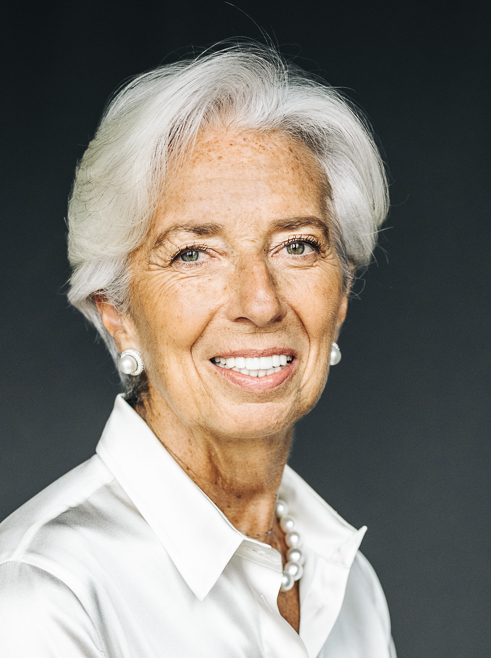
Speech by Christine Lagarde, President of the ECB, at the Hearing of the Committee on Economic and Monetary Affairs of the European Parliament
Brussels, 28 September 2026
It is a pleasure to be back before this Committee as part of our regular dialogue.
The topic for today’s hearing goes to the heart of Europe’s economic future.
Artificial intelligence has the potential to transform how we produce, work and innovate. Firms are set to devote around 10% of total investment to AI in 2026, and AI-related borrowing already accounts for roughly a quarter of credit growth to firms. [1]
AI could significantly enhance Europe’s productivity, competitiveness and living standards. But it will also affect – and to some extent is already affecting – investment, labour markets and inflation, and it therefore also matters for monetary policy.
Europe has a real opportunity to harness this technology. But success is not automatic. We need to seize the benefits, while managing the risks appropriately.
In my remarks today, I will first discuss the outlook for the euro area economy and explain our latest monetary policy decisions. I will then elaborate on how artificial intelligence may affect inflation and the wider economy.
Incoming data and the outlook for the euro area
Despite headwinds from the energy shock, the euro area economy proved resilient with solid real GDP growth in the second quarter of 2026. Growth was broad-based across most countries and sectors. This pattern is expected to have continued in the third quarter.
Manufacturing is performing solidly, supported by higher government spending on defence and infrastructure. Consumer confidence has rebounded from the low levels in the spring, helping services recover. And increased AI-related activity is visible in digital services, business investment and exports.
The labour market remains robust. Unemployment stood at 6.4% in July, although growth in employment and the labour force continue to slow. Productivity has gradually picked up.
Over the medium term, consumption should be supported by gradually falling energy prices and a robust labour market. Business and housing investment should increasingly bolster growth, while exports should benefit from stronger foreign demand.
The baseline of the September ECB staff projections expects the economy to grow by 0.9% in 2026, 1.4% in 2027 and 1.5% in 2028.
Headline inflation increased to 3.2% in August, from 2.9% in July. Energy inflation rose to 14.3%, after 10.3% in July. This increase reflects, in particular, a strong contribution from refining margins on liquid fuels, as well as higher energy commodity prices. At the same time, food price inflation decreased to 1.1% in August, from 1.2% in July.
Inflation excluding energy and food edged down to 2.4%, owing to a fall in services inflation, only partially offset by an increase in goods inflation. So far, wages do not show a material response to the energy shock. Compensation per employee, which measures nominal wage growth, stood at 3.3% in the second quarter, down from 3.6% in the first quarter.
The baseline of the September ECB staff projections sees headline inflation averaging 3.0% in 2026, 2.5% in 2027 and 2.1% in 2028. For inflation excluding energy and food, the baseline foresees 2.5% in 2026, 2.6% in 2027 and 2.3% in 2028. Inflation expectations over shorter horizons remain at elevated levels, but most measures of longer-term inflation expectations stand at around 2 per cent, supporting the stabilisation of inflation around target in the medium term.
The outlook continues to be surrounded by high uncertainty, with upside risks for inflation and downside risks for economic growth.
The ECB’s monetary policy stance
In line with our commitment to ensuring that inflation stabilises at our 2% target in the medium term, we decided to raise the three key ECB interest rates by 25 basis points at our monetary policy meeting earlier this month.
Let me explain the rationale for this decision.
When facing energy shocks, the ECB has a very clear strategy: we do not react to energy prices, we react if we see risks of higher energy prices becoming embedded in inflation. We assess these risks through a comprehensive assessment grounded in our “three criteria”.
These are: first, the inflation outlook, where we look at our forecast for inflation and the risks surrounding it. Second, the dynamics of underlying inflation, which today is mostly about how higher energy prices are feeding through to other prices and wages. Third, the transmission of our monetary policy to borrowing costs and to economic growth.
Looking at these three criteria today, we see higher inflation ahead but no signs yet that it is becoming embedded. The inflation outlook will be higher in 2027 and 2028 than we expected a few months ago, mostly due to higher energy prices. But we do not see evidence at this stage of energy prices feeding into higher wages. And while growth has been resilient, since our last meeting long-term interest rates have risen notably, which will slow growth and reduce pass-through by more than projected in our September exercise.
Taken together, this means that we remain in the “middle path” for monetary policy that I laid out earlier this year. This means that while the shock is too large to look through, we view a measured response as appropriate to keep inflation in check.
How AI can shape the economy
Let me now turn to artificial intelligence.
AI is a transformative force. It can reshape production processes, business models and structures across the entire economy.
But its overall macroeconomic effect is uncertain. Its impact will work through several interconnected channels, encompassing both the demand and supply sides of the economy, and will unfold over time.[2]
I will focus on two of the channels most relevant for the outlook for inflation: first, productivity and investment, and then labour markets and income distribution.
First, productivity and investment.
AI has the potential to help firms produce more, and, over time, higher productivity could lower costs.[3] All else equal, this should reduce inflationary pressures in the long term.
But the size and speed of that effect will depend on adoption in the economy.
There are some encouraging signs but there is also additional work to be done. A recent ECB survey finds that by late 2025, 38% of euro area firms already reported at least moderate use of AI.[4] Yet only 7% reported significant use.[5]
Unlocking the full potential of AI will require substantial investment. Europe needs investment in innovation, but also computing capacity, data centres and energy. Firms also need to adapt their processes and train their employees.
AI-related investment is rising in Europe, and more is in the pipeline for firms, but still lags behind the United States.[6] [7] In parallel, European initiatives like InvestAI and the Scaleup Europe Fund can help mobilise additional investment in AI infrastructure. €30 billion for AI Gigafactories – to develop advanced AI in the EU – is a good start.
At the same time, AI investment activity will also depend on what happens in financial markets, and whether risks associated with booming AI funding will materialise. Global equity valuations are concentrated in a relatively small number of AI-related firms, which are also rapidly increasing their debt funding. A sharp reassessment of AI companies’ prospects and the sustainability of their debt could trigger market corrections and spill over to euro area investors and the wider economy.[8]
Second, AI will work through labour markets and income distribution.
AI will change both the tasks people perform and the skills firms need. How the gains from AI are distributed will matter.
Over 50% of workers already use AI in their job. And so far, on balance, firms are continuing to hire.[9] In fact, survey evidence suggests that firms making significant use of AI are more likely overall to recruit new staff in the transition phase. But it matters what firms are using AI for. Firms using AI to support research, innovation and new products tend to hire, while those using it primarily to cut labour costs are reducing employment.
The central question is hence whether – over the longer term and for the economy as a whole – AI will mainly complement workers or replace them.[10] This can then affect incomes, demand and ultimately inflation, but those impacts are still uncertain. Historically, major technological advancements have not reduced employment, but right now the verdict is still out on whether AI may prove different.[11]
What, then, should Europe do to capture the AI growth opportunity, while also ensuring sovereignty?
First, Europe must enable innovation in AI.
Innovative ideas and firms need large and integrated markets, deep and accessible capital, significant computing power and skilled workers, as well as abundant and affordable energy.
That means reducing fragmentation in the Single Market, advancing the savings and investments union and accelerating the energy transition. EU initiatives including AI factories, testing facilities and regulatory sandboxes can also help ideas move faster from research to commercial use.
And there is room to innovate in many areas: from greener chips to more efficient algorithms.
Second, Europe must build greater independence.
Europe should strengthen underdeveloped critical parts of the AI value chain. Building European capacity will also ensure that we can rely on European tech for sensitive activities – in line with the aim of the Technological Sovereignty Package.
The goal is not self-sufficiency. It is to ensure that critical functions can operate under any circumstances.
At the same time, Europe has an interest in a strong foothold in the global AI value chain, both for economic and geostrategic reasons.
Third, Europe must deploy AI intensively.
AI adoption must spread beyond a small group of technology leaders. But diffusion alone is not enough. Firms must also use AI deeply and effectively. Among other things, this will require targeted support for retraining programs to address the critical shortages of AI-related skills and ensure the workforce can adapt to this transformative shift.
Applying the AI Strategy can support broader adoption. We also look forward to the Commission’s forthcoming initiatives on industrial AI in priority sectors.
Conclusion
Let me conclude.
For monetary policy, the task is clear: we must closely observe and study how AI affects productivity, investment, labour markets, financial conditions and inflation, so that we can continue to fulfil our mandate of maintaining price stability.
For Europe, the direction of travel is equally clear. We must create the conditions for AI to raise productivity and living standards, and we must ensure our AI sovereignty.
The precise effects of AI remain uncertain. But uncertainty is not a reason for inaction.
As Alan Turing, a pioneer of computing, once observed: “We can only see a short distance ahead, but we can see plenty there that needs to be done.”
That is equally true for artificial intelligence today.
See Ferrando, A. et al (2026), “Adopting and investing in AI: evidence from euro area firms in the SAFE”, Economic Bulletin, Issue 2, ECB.
For broad reviews of aggregated demand and supply side channels, see e.g. Bank for International Settlements (2024), BIS Annual Economic Report 2024; Hartmann, P. and Maver, V. (2025), “Implications of Artificial Intelligence for Monetary Policy – A First Conceptual Assessment”, SUERF Policy Brief; and Lane, P.R. (2026), “AI and the euro area economy”, keynote speech at the ECB-SAFE-RCEA International Conference on the Climate-Macro-Finance Interface, Frankfurt, 23 March.
ECB staff estimate that AI could raise euro area productivity growth by around 0.3 to 0.4 percentage points per year over the next decade under a scenario of swift and broad adoption. Under slower adoption, the estimated effect would be roughly half the size. See Lane, P.R. (2026), “AI and the euro area economy”, keynote speech at the ECB-SAFE-RCEA International Conference on the Climate-Macro-Finance Interface, Frankfurt, 23 March; and Bergeaud, A et al. (2025) “AI can boost productivity – if firms use it”, The ECB Blog, ECB, 28 March. More recent estimates, based on information about workers' reported time savings due to AI use, suggest that we may expect gains closer to the upper bound (see Dias da Silva, A. et al. (2026), “AI adoption and the productivity promise: what workers report”, The ECB Blog, ECB, 26 August).
See Ferrando, A. et al. (2026), “Adopting and investing in AI: evidence from euro area firms in the SAFE”, Economic Bulletin, Issue 2, ECB.
See Chaloupka, D. et al. (2026), “What separates firms that use AI intensively from firms that don’t?”, The ECB Blog, ECB, 24 June.
See Andersson, M. et al. (2026), “From bricks to clicks: an assessment of euro area digital investment”, Economic Bulletin, Issue 2, ECB.
Furthermore, US technology firms are increasingly raising funds in euro area bond markets, which could make financing more costly for other firms and sectors.
See Andersson, M. et al. (2026), “The AI boom: rational enthusiasm or the next dot-com bubble?”, The ECB Blog, ECB, 17 August.
See Lebastard, L. and Sondermann, D. (2026), “Artificial Intelligence: friend or foe for hiring in Europe today?”, The ECB Blog, ECB, 4 March.
The effects of AI on the labour market are likely to be uneven across workers and firms, notably across different sectors, with augmentation of human capabilities, potential displacement effects, creation of new tasks and implications for labour demand and wages.
Historically, general-purpose technologies – such as the steam engine, electricity, and the computer – initially eliminated specific tasks and industries while ultimately creating entirely new occupations and lifting productivity, without reduced aggregate employment in the long run, and sometimes even leading to modest increases. Whether aggregate demand increases will thus depend on whether this historical regularity holds for artificial intelligence.
European Central Bank
Directorate General Communications
- Sonnemannstrasse 20
- 60314 Frankfurt am Main, Germany
- +49 69 1344 7455
- media@ecb.europa.eu
Reproduction is permitted provided that the source is acknowledged.
Media contacts-
28 September 2026